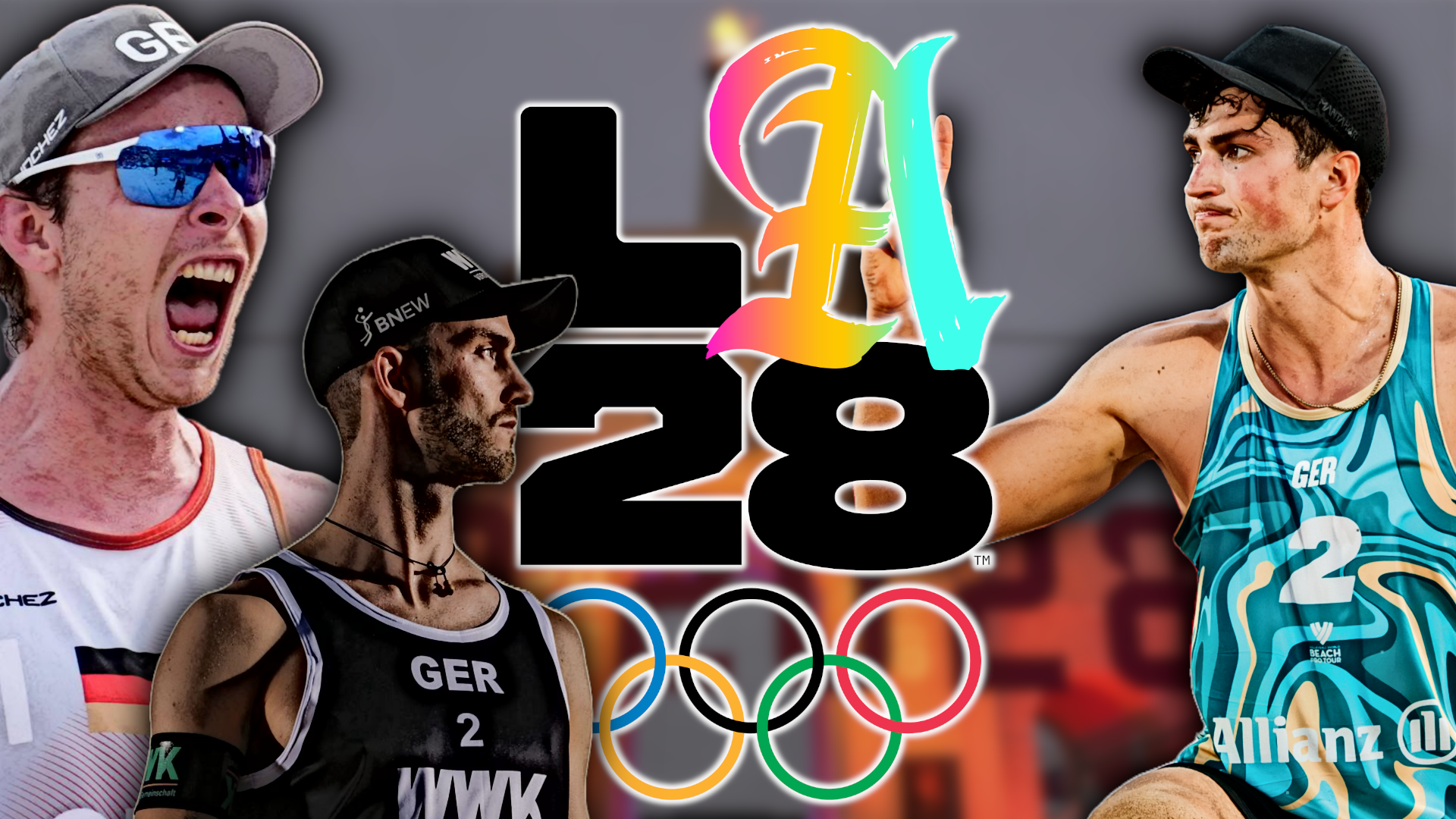
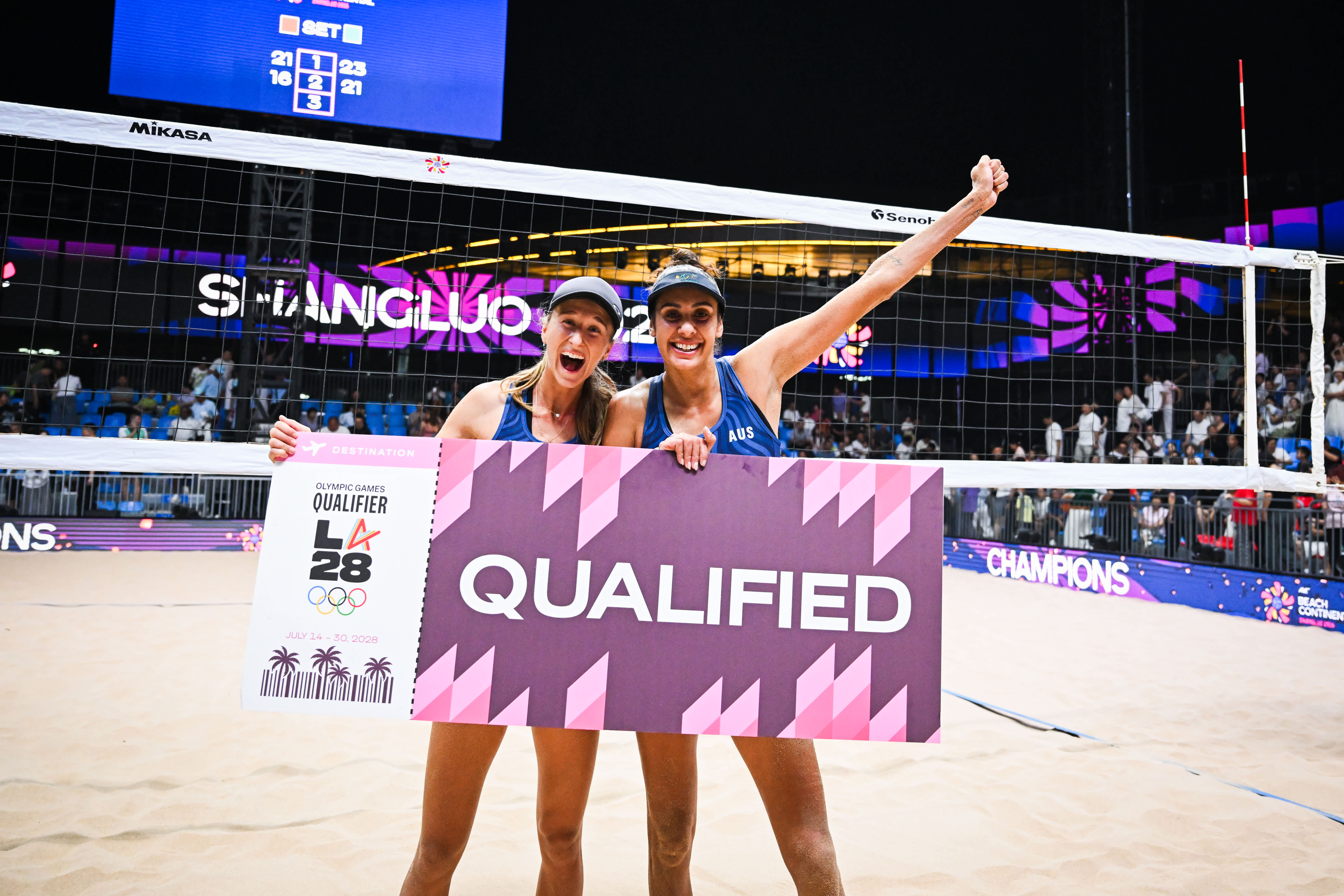
Road to LA 2028: Men's Beach Volleyball Olympic Qualification

Los Angeles 2028 is no longer a distant horizon — for men's beach volleyball, the Olympic qualification map is already live. Twenty-four teams will take the sand in California, and every quota path now shapes weekly tournament calendars, partnership decisions, and ranking strategy. Europe has already stamped its first Continental ticket; other confederations are still racing through the August–November 2026 window. For German fans, the question is sharper still: after the big national-team reshuffle, which duos can realistically fight for one of the precious NOC slots?
- 24 teams, five paths: Host USA, Continental 2026, World Championships 2027, Olympic Ranking, and Olympic Q-Series.
- Europe locked: Sweden’s Hölting Nilsson / Andersson secured the men’s Continental quota at EuroBeachVolley 2026.
- German contenders: Ehlers/Wüst, Wickler/Pfretzschner, and Winter/Sagstetter headline the ranking fight.
- Max two per NOC: Even strong nations can send only two men’s teams to LA 2028.
Train Olympic tactics at home: Get Beachvolleyball – The Cardgame today!
How Men Qualify for LA 2028: The 24-Team System
Beach volleyball at the Olympic Games remains a tight field: 24 teams per gender, 48 athletes, and a hard cap of two teams per National Olympic Committee. That last rule matters as much as any medal round — deep nations cannot simply flood the draw. The men’s qualification architecture for Los Angeles 2028 splits the 24 berths across five channels:
- Host nation (1): The United States receives an automatic men’s berth as Olympic host.
- Continental Qualification 2026 (5): One NOC quota per confederation, decided inside the August–November 2026 Continental window.
- World Championships 2027 – Netherlands (1): The FIVB Beach Volleyball World Championships in the Netherlands award one Olympic berth.
- Olympic Ranking (14): The bulk of the field comes from the Olympic Ranking list — the long grind of Elite 16s, Challenges, and Finals points.
- Olympic Qualification Series 2028 (3): Three late berths are decided at the Olympic Q-Series events planned for Shanghai, Montreal, and Orlando.
In practice, that means most teams live or die by ranking consistency across 2026–2028, while Continental and Worlds tickets create early “safe” NOC slots that reshape who still needs ranking points. Understanding the map is half the battle — the same way reading serve, block, and counter options decides matches in Beachvolleyball – The Cardgame.
Continental Window 2026: Europe Has Its Ticket
The Continental Qualification window runs from August through November 2026. Europe has already completed its assignment: at EuroBeachVolley 2026 in Stare Jabłonki, Sweden’s Jacob Hölting Nilsson and Elmer Andersson locked the men’s European NOC quota for LA 2028 — a historic first Continental Olympic ticket outside the host pathway. On the women’s side at the same event, the Netherlands (Stam / Schoon) secured Europe’s female berth, underlining how quickly the Olympic board can change in a single championship week.
Other continents remain inside the window or have only recently contested their events. We are not inventing unverified winners here: what is confirmed is that Europe’s tickets are punched, while the remaining confederations are completing their processes toward mid-November — with NORCECA among the late movers in November. Until those Continental NOC quotas are officially confirmed, ranking strategy stays fluid: teams from continents that still need a ticket will treat every Challenge and Elite 16 start as Olympic capital.
For German pairs, the European Continental slot being gone simply clarifies the mission. There is no shortcut via the EuroBeachVolley ticket anymore. The realistic paths are Olympic Ranking depth, a strong run at the 2027 Worlds in the Netherlands, and — if needed — a late push through the 2028 Q-Series. That is exactly why 2026 autumn results and early 2027 chemistry matter so much after Germany’s roster reset.
Germany’s Top-Three Olympic Chances
After the DVV reshuffle detailed in our overview of the new German beach volleyball national teams for LA 2028, three men’s pairings sit at the center of the Olympic conversation:
- Nils Ehlers & Lui Wüst: The new duo already delivered Elite 16 gold in Hamburg (Elite 16 Hamburg 2026 recap) and German Championship gold at the GBC Dortmund 2026 men’s finals. Instant ranking credibility plus proven big-event composure make them Germany’s clearest early Olympic marker.
- Clemens Wickler & Lukas Pfretzschner: Wickler’s elite defense paired with Pfretzschner’s speed and blocking profile is built for long ranking campaigns. Chemistry takes time — but if the block-defense connection clicks, this duo has the tools to live among the Olympic Ranking contenders.
- Sven Winter & Jonas Sagstetter: Explicitly oriented toward championship qualification and LA 2028, Winter/Sagstetter need consistent international points and tournament depth. In a system that rewards durability over highlight weeks, their season planning into 2027 will be decisive.
Remember the NOC cap: Germany can send at most two men’s teams. That turns domestic rivalry into Olympic math. Strong results help everyone — until two German pairs are already inside the ranking cut and a third is knocking. Fans who love that strategic tension will also enjoy our top board games for sports fans — or packing for the next training camp with our beach volleyball camp packing list.
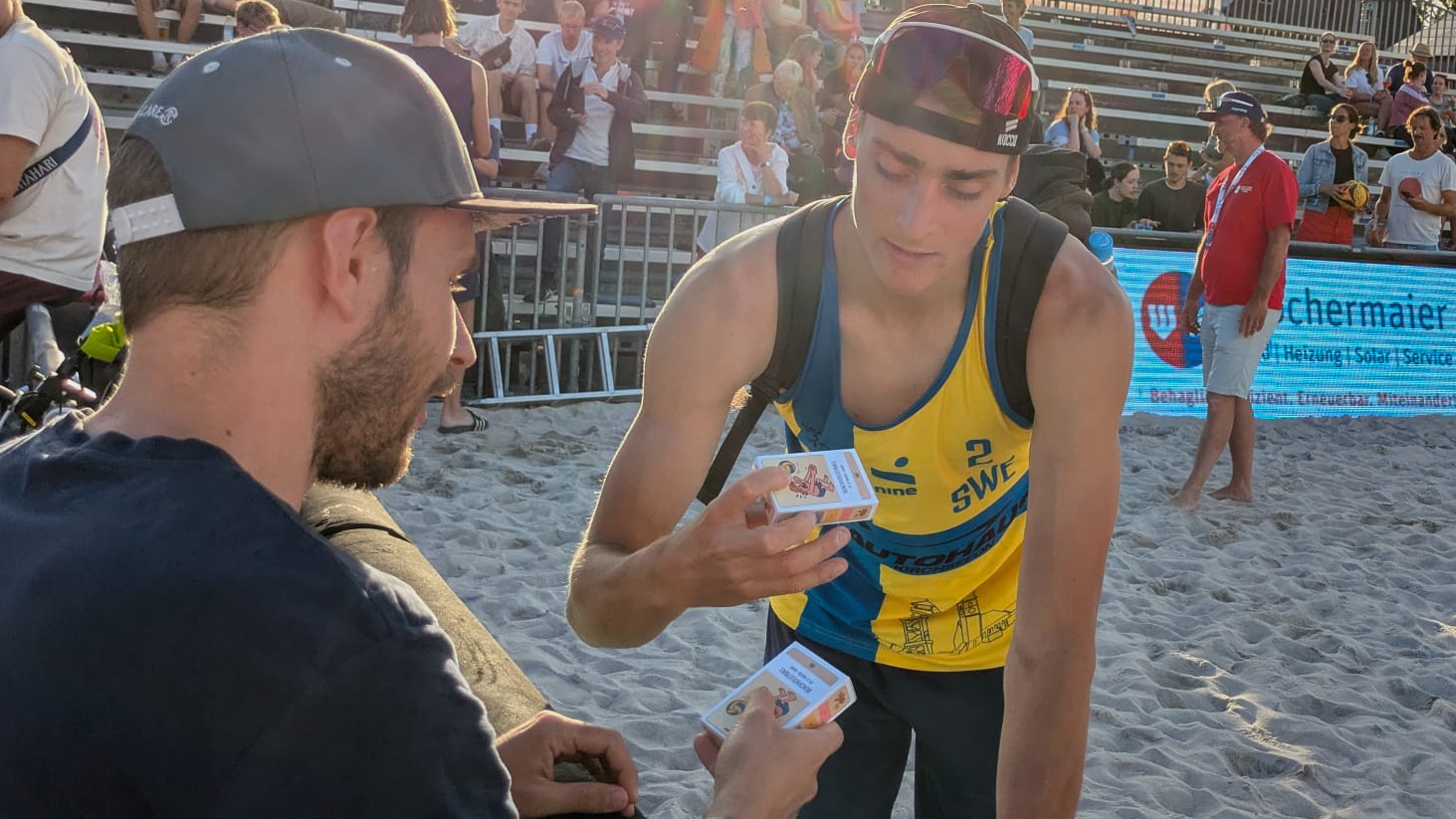
In the photo: Beachvolleyball – The Cardgame. Ranking races, Continental tickets, and Q-Series pressure — the same high-stakes choices you replay every hand at the table.
German Olympic History: Gold, Bronze, Silver
German men’s beach volleyball already owns Olympic chapters that still define the sport’s national identity. Julius Brink and Jonas Reckermann delivered Germany’s men’s Olympic gold in London 2012 — a breakthrough that proved German beach volleyball belongs on the absolute world stage. Earlier, Jörg Ahmann and Axel Hager earned Olympic bronze in Sydney 2000, planting the first German men’s Olympic medal in the sand.
The newest chapter came in Paris 2024: Nils Ehlers and Clemens Wickler captured Olympic silver — the result that still frames every conversation about Germany’s next Olympic cycle. That silver also explains why the 2026 partnership split felt so consequential: two Olympic finalists chose new paths, each aiming to rebuild toward LA 2028 rather than freeze a successful past. History does not award future quotas — but it does set the standard German pairs are chasing again.
Looking for gifts that celebrate that Olympic legacy off the court? Browse our gift ideas for beach volleyball players and best card games for summer beach days.
Outlook: Ranking Path and the 2028 Q-Series
From October 2026 onward, the men’s road to LA 2028 is a three-layer campaign. First, accumulate Olympic Ranking points with ruthless consistency — especially for German pairs who no longer have a Continental shortcut. Second, treat the 2027 World Championships in the Netherlands as both a title hunt and a one-berth opportunity. Third, keep the Olympic Qualification Series 2028 on the calendar: Shanghai, Montreal, and Orlando will decide the final three men’s berths for teams still outside the ranking cut.
Parallel storylines matter too. While this article maps the men’s system, the women’s qualification board is moving on the same timeline — including the Netherlands’ already-locked European Continental quota. Read the companion piece: Road to LA 2028: Women’s Beach Volleyball Olympic Qualification.
For Germany, the next 18 months are about chemistry under ranking pressure. Ehlers/Wüst start with momentum; Wickler/Pfretzschner and Winter/Sagstetter must convert potential into points. Only two NOC berths are available. Los Angeles will not wait — and neither will the ranking list.
Master the court tactics: Get Beachvolleyball – The Cardgame today!
Disclaimer: This article was created with the help of artificial intelligence (AI) and reviewed and optimized by our editorial team.